Elizabeth Key of Jamestown
(Due for Publication 2027)
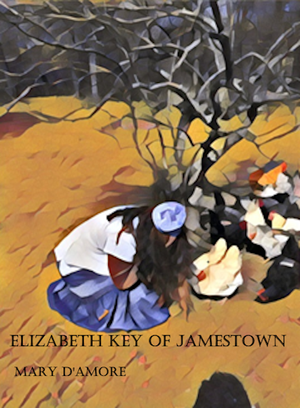
This book was written in homage to The New York Times’ The 1619 Project.
Elizabeth Key was born in 1632 in Jamestown, to an English settler father and an enslaved African mother. Both parents had arrived in Virginia in 1619, at a time when slavery was not yet fully defined in English colonial law.
Elizabeth’s early life was shaped by contradiction. She was at first raised with the protections and expectations associated with her father’s status. Those protections were later stripped away through betrayal and loss, and she was unlawfully held in bondage beyond the term dictated by her father when he returned to England and turned her care over to someone he trusted.
Elizabeth fought back.
In the 1650s and with the help of her lover, she brought a lawsuit for her freedom, arguing that she was entitled to liberty because her father was English and because she was a baptized Christian. She won. Elizabeth Key secured her freedom, married, and lived the remainder of her life as a free woman.
Her personal victory, however, exposed a danger to those who profited from slavery.
In the years that followed, powerful plantation owners rewrote colonial law. New statutes declared that children would inherit the enslaved status of their mothers, regardless of their fathers. These laws were designed explicitly to prevent future “Elizabeth Keys” and to secure slavery as a permanent, hereditary system.
This book tells the story of a woman whose courage briefly bent the law toward justice, and how that justice was deliberately undone.

I include this lineage (click on book pages above) not as a claim of ownership, of course, but as an invitation to inquiry (and as education for my own grandsons). This book, while planting only a seed for a child’s future learning “connections,” explores how some people can be just and others greedy depending on their personal moralities and circumstances.

© 2026 Mary D’Amore, All Rights Reserved